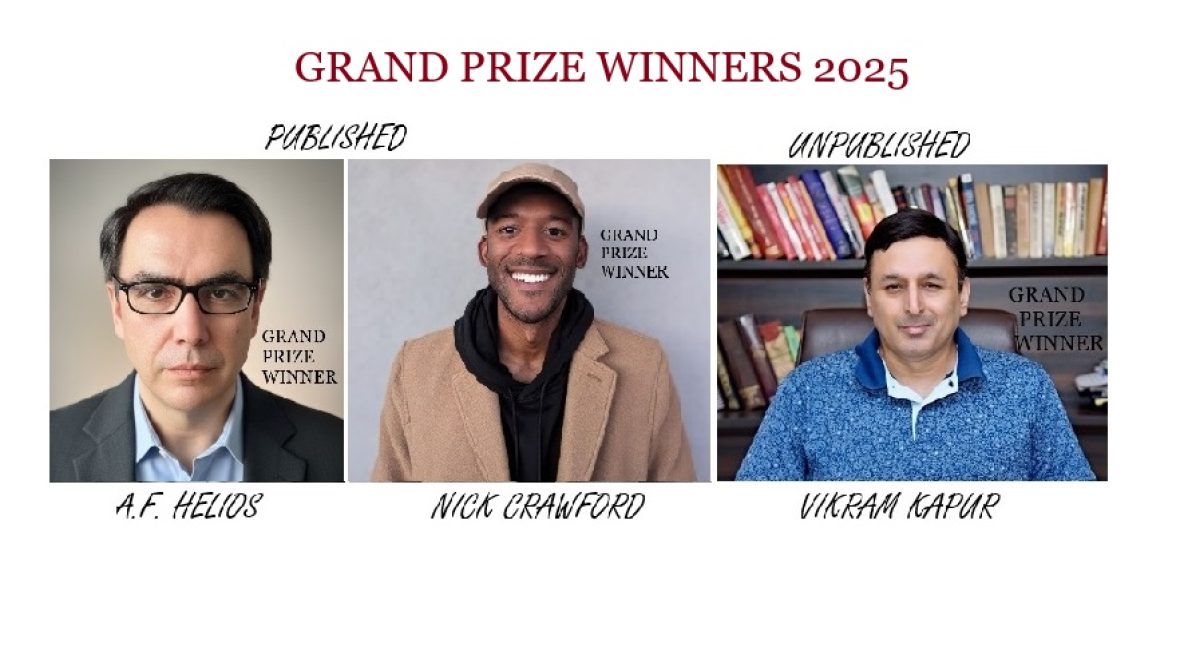
It’s time to get to know more about the great winners of the contest that ended just a few weeks ago. Here are their answers to an online interview, and we think they are really interesting. We thank them once again and we are very happy that they will be with us in some way throughout the year, either as authors who we will translate their book or as guests in Athens for the award ceremony but of course as judges of our next competition!!
QUESTIONS FOR GRAND PRIZE WINNERS
(alphabetical order)
GRAND PRIZE PUBLISHED BOOK
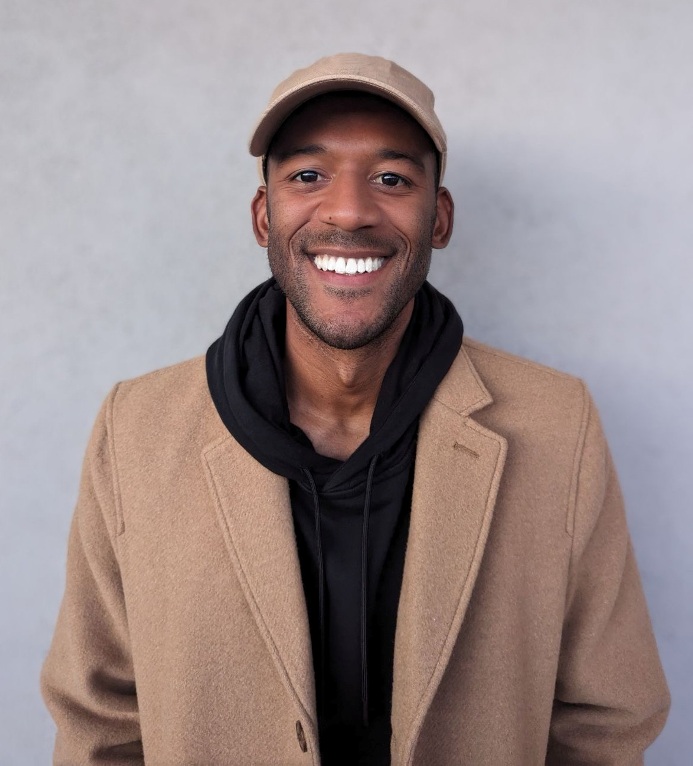
The Bright Highway – Nick Crawford /USA
How do you feel that you are the grand prize winner of an international literature contest?
It’s extremely gratifying. I spent about six years writing, editing, and self-publishing this book, so it’s really a fantastic feeling whenever anyone appreciates my work, let alone a writing competition. I never expected to receive this honor, and I will certainly cherish this brief moment in the spotlight for the rest of my days. It’s a dream come true.
What was your first reaction when you heard the news about the prize?
Well, I was traveling in Paris at the time with my soon-to-be fiancée, and I was starting to think I hadn’t won since it was the 31st of December and no news had reached me yet. It was about four in the morning when I finally saw the announcement on the Eyelands website, and again I thought I hadn’t won because my name wasn’t mentioned in the science-fiction category, but as I scrolled to the bottom of the list I finally saw my name and image listed as a Grand Prize winner. I just stared and stared at that, wondering if it was some kind of mistake. I was shocked and just incredibly happy and grateful when I finally accepted that it was real. My girlfriend didn’t wake up for a few more hours, so I just paced around in our little rental apartment in excited silence as the sun came up.
How did you hear about the contest?
I did an internet search, which led me to a site called The Novel Factory. I scrolled through a few of the competitions listed there and landed on Eyelands. A trip to Greece seemed like an incredible prize, so I tried my luck and here we are!
When did you start writing?
I started writing this book near the end of 2019. I started writing with the intention of being a professional writer in 2010 after I graduated from UC Irvine. It was all short films and screenplays back then. I started writing little stories and poems when I was much younger, maybe eleven or twelve years old, but those scribblings were rather scattered and experimental. I really loved to draw back then, so most of my writings were character backgrounds for the heroes and villains I was doodling.
I can see from your bio that you are work in the film industry. Have you written scripts for cinema or TV or have any of your writings adapted for film?
I have written ten feature film scripts, two TV pilots, and many short films, one of which premiered at the Austin Film Festival in 2018 and was later licensed by Alter. That can be viewed on YouTube. It’s a horror short called Room Tone (2021). My feature film scripts and TV pilots have accrued various option agreements and high honors from most of the major writing competitions in Los Angeles, but none of them have been produced just yet. Though, I do have a good feeling about 2026.
You wrote a brilliant book. What was the inspiration for ‘’The bright highway’’?
That’s a bit hard to narrow down. It’s so many things, some of which I reference directly in the book. I really love science-fiction movies, and there are aspects of some of my favorites in The Bright Highway. Those would be Blade Runner, District 9, Avatar, Upgrade, and a few fantasy favorites like Princess Mononoke. My literary influences would be Philip K. Dick, George R. R. Martin, and J. R. R. Tolkien. I’m a huge fan of comics, especially those written by Geoff Johns, Akira Toriyama, and Yukito Kishiro. Thematically, I was seeing a lot of anger and division in the United States, so I wanted to write something that might inspire unity and reconciliation between individuals and groups who could only see each other as distant enemies.
What would you say if I asked you for a brief synopsis of your book?
I would tell you to Google it. Just kidding. I would say The Bright Highway is a high-octane sci-fi adventure, blending raw action with layered introspective wit. More than thirty years have passed since the first Luminarans arrived on Earth. They are a mysterious species of psychic refugees arriving from an unseen, distant world. For years, they were studied and admired. Now, in the wake of the catastrophic Chicago Storm, they are feared, despised, and hunted. Former Orbital Patrolman, Emmett Hayes, is tasked with the latter. He’s an Old Dallas soldier with a special hatred for the reachers (a common slur), making him more than happy to participate in their total expulsion from the Earth. However, along the course of this galactic genocide, he may be fated to discover a brighter love than he’s ever known.
How do you feel with the idea that you will travel to Greece for the ceremony?
I love that I will be traveling to Greece for the ceremony! I have never been to Greece, and that is one of the most exciting aspects of this entire Eyelands experience. My fiancée loves it too!
How do you feel with the idea you will be the judge for Eyelands Books Awards 2026?
Sounds great to me. I’ve been a judge for the Austin Film Festival since 2019, and I absolutely love reading and watching new material by undiscovered talent. It can be tough deciding who gets to be a winner and who needs to keep working and try again next year, but I have been there many times myself, and there is certainly a value in every rejection if you can convince yourself to learn from it and take your skills to the next level.
What are your writing plans?
I’m nearly done writing another feature film script, a road trip comedy, which may be my last one for a while. Writing The Bright Highway has proved to be an extremely fulfilling pivot for me, and I fully intend to write another science-fiction novel soon. I also have several completed short stories and a few developing ideas that I intend to write and arrange into a short story collection.
(equal votes)
GRAND PRIZE PUBLISHED BOOK
Loukas & Lydia and the Secret of the Disk – A.F. Helios /USA
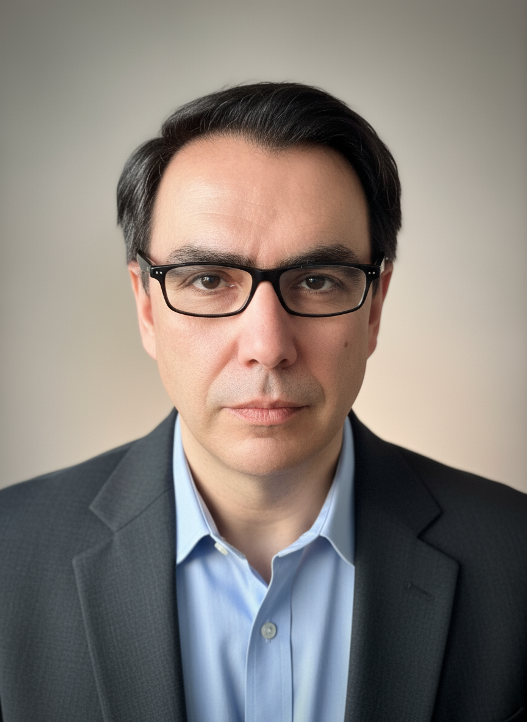
How do you feel that you are the grand prize winner of an international literature contest?
I feel deeply grateful — and honestly, a little surprised. Not in a “wow, is this real?” way… more like that quiet moment when you realize your work actually reached people. I put years of heart into this story, and to see it recognized internationally feels like someone gently saying, “Yes… this mattered.” That kind of recognition does something good to your spirit. It’s not about bragging. It’s about feeling seen.
What was your first reaction when you heard the news about the prize?
I was on the road with my family, driving from New York City back to New Jersey after a Downtown+Broadway day out. We stopped at a gas station, and Loukas was playing on my phone when he suddenly goes:
“Dad… I think you won the grand prize.”
Of course I thought he was joking — especially because earlier that day I had beaten him in a skating race at Rockefeller Center, and I assumed this was his revenge. I just said, “Yeah sure.”
But he kept reading… and he mentioned “sharing first place.” That’s not something a ten-year-old invents for fun. So I froze for a second, then I said the first thing that came out of me:
“Guys… next November, we’re going to Greece!”
Their reaction was actually funnier than mine. I was trying to process it like an adult… they processed it like kids: pure excitement and chaos. I loved that.
Does it have any special significance for you that the competition is based in Greece?
Absolutely. It’s hard to explain what it feels like to be an X generation Greek living abroad and have your first published book recognized through a major competition based in Greece. It felt unexpected — and at the same time, so fitting.
Greece is not just “where I’m from.” It’s the country of Elytis and Seferis, the country of the stories that shaped me, and the place where myth and history live side by side like they’re still breathing.
I even caught myself remembering one of my favorite books from childhood, Astradeni by Evgenia Fakinou — that feeling of a young person standing on an Aegean island and looking at the world with wonder. And I thought: Loukas and Lydia carry that same kind of wonder.
So yes… if this book had to be honored somewhere, Greece feels like the most meaningful place it could happen.
How did you hear about the contest?
It was during the second week my book was out — when the paperback format first hit Amazon, Barnes & Noble and the ebook some other platforms. I received a message from a reader who also happens to be a history teacher. They wrote something that stayed with me: that it had been a long time since they’d read an adventure that truly blended real history, mythology, science, and fiction in a way that felt fun and meaningful.
At the end of the message was a link: the Eyelands International Book Awards registration page.
My first thought was: An international competition? What are the odds?
Then I started looking at past finalists, the quality of the books, and I thought, Okay… this is serious.
And only after digging more, I realized it was a Greek initiative — something unique, something built with passion. And I remember telling myself:
“If this book ever has a chance to be understood, appreciated, and judged fairly… let it start in Greece.”
So I hit Submit — and I moved on with my life like nothing happened.
Apparently… something happened.
When did you start writing?
Writing wasn’t new to me — but this kind of writing was. As a professor, I’ve published plenty in academic settings. That’s a completely different universe: strict, formal, and very “don’t you dare improvise.”
But storytelling… that started at home.
When Loukas and Lydia were little, we had a weekly tradition: a late-night “Daddy Show” before bed. One week I’d perform in Lydia’s room, the next in Loukas’s. They’d sit comfortably on the bed, and I would use their many stuffed animals as characters.
And kids are the best audience… because they’re also the strictest.
You have about ten minutes to make them laugh, wonder, worry, and care. No pressure.
Sometimes they’d be laughing, then suddenly completely silent like something important is happening, and then five seconds later they’d be shouting, “NOOO DON’T GO IN THERE!” at a stuffed panda.
One day I realized my wife was recording it.
And that’s when it hit me: these weren’t just random bedtime stories.
That was the beginning of Loukas and Lydia — and the beginning of this whole world.
I can see from your bio that you also write music. What is the kind of music you are writing?
I’m a composer and music director by profession, and for the last decade my main focus has been open-world video game music — the kind where the player explores freely, but the story can suddenly pull you into something intense and cinematic.
In that world, music doesn’t just decorate the story. It tells it first.
The music senses where you are, what danger is nearby, what memory is waking up, what discovery is about to happen… and it evolves.
As a composer, that means I don’t write one piece. I write multiple paths that can connect seamlessly — so any emotional combination still makes sense.
And strangely… I write my stories the same way.
I build arcs that weave together so the reader keeps thinking “Wait… what if…?”
And then later they realize:
“Aha. I’ve seen this before… in chapter X.”
That’s my favorite feeling — the moment the dots connect, and the world becomes bigger.
Greek mythology has a strong influence in this story. Was this your first thought – to write something inspired from Greek mythology?
First, thank you — I’m truly happy you enjoyed the book.
And yes, mythology was always there… but the real spark came from my kids.
For Greeks in the diaspora — especially second generation and beyond — the strongest link back to Greece is not geography. It’s family, tradition, and history.
When Loukas and Lydia were very young, they spoke Greek at home and English came quickly through school. Mythology became their favorite topic — not in a “school assignment” way, but in a “tell me everything” way.
One summer evening, while enjoying our Greece vacation, at Cape Sounio, watching the sunset, they asked me:
“What if ancient heroes were real?”
And then Lydia added, very calmly:
“What if the gods were just powerful influencers of that time?”
My wife laughed.
I didn’t.
Because that innocent “what if…” hit me hard. It stayed in my mind for weeks. And that’s where the idea was born:
Greek mythology through the lens of historical fiction — with science, mystery, and heart.
Do you maintain ties with Greece even though you live abroad?
Yes, and I’m grateful for that. I have family in Greece, and that’s a blessing that never becomes “normal.”
Whenever we visit, the kids have the best kind of vacation: cousins, friends, freedom, late dinners, and that special Greek feeling that time works differently.
And we don’t only stay in one place. We travel as much as we can — museums, archaeological sites, small towns, local food, and the kind of experiences you can’t really plan… they just happen. Greece always gives you something unexpected.
How do you feel with the idea that you are invited to Greece for the award ceremony?
I can’t wait. I’m already planning it in my head like it’s a film schedule.
Part of me wishes I could bring the whole family for a full week, but the kids will be deep into school and activities, so we’ll see what’s possible. Either way, being invited back to Greece for something like this feels emotional — not just professional.
It’s like returning home… with a new chapter in your hands.
How do you feel with the idea you will be the judge for Eyelands Book Awards 2026?
That was another surprise — a big one.
I feel honored, but also excited in a very “curious reader” way. I love discovering stories before they reach the world. It’s like being invited into a hidden room of imagination — where writers are still building their worlds.
And I take it seriously. Because I know how much courage it takes to submit your work and say, “Here… this is something I made.”
What are your writing plans? Among these plans is to create a book series with Loukas & Lydia?
Yes — Loukas & Lydia and the Secret of the Disk is only the beginning. It belongs to a bigger series called The Disk Chronicles.
The full arc is planned as six books, and two are already completed and moving toward publication.
And here’s the fun part: even though Secret of the Disk is Book 1, it’s not the first story chronologically. The prequel, The Shadow of Thera, takes place earlier in the timeline — before Knossos.
But I’ll stop here, because if I keep talking, I’ll spoil things.
What I can say is that the first two books are deeply connected, and the later books were designed from the beginning to link back in ways the reader won’t expect. It’s one continuous mystery — just told through different adventures.
GRAND PRIZE UNPUBLISHED BOOK
Gandhi Colony – Vikram Kapur /India
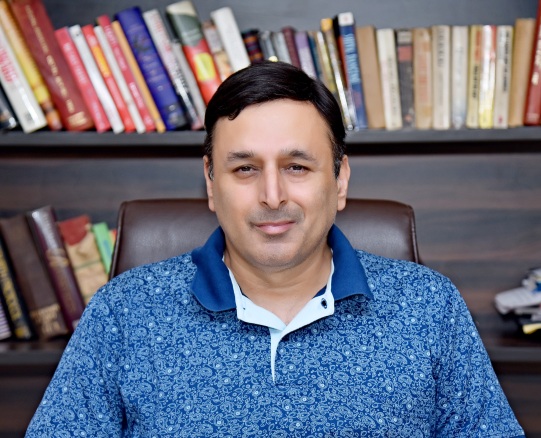
How do you feel that you are the grand prize winner of an international literature contest?
I feel great. Many fine writers from several countries entered the contest. And I was the one lucky enough to scoop up the top prize. That is a heady feeling. At the same time, I am thankful. It was one of those occasions where the stars aligned in my favour.
What was your first reaction when you heard the news about the prize?
To be entirely honest, at first, I thought I hadn’t won anything. I knew the winners were going to be announced on December 30th. I waited for the email announcing the results to come right through December 31st. When it did not, I assumed that I hadn’t won. So you can well imagine my surprise when I opened my email on New Year’s Day to learn that I had won. I couldn’t have asked for a better New Year present.
You are the first ever grand prize winner from the Asia continent, what do you think about this?
I am happy and grateful. I might be the first, but I’m sure I won’t be the last. Asia is teeming with wonderful writers. After this win, I’m sure more will enter the competition than ever before.
How did you hear about the contest?
Through the internet.
When did you start writing?
Writing is a lonely vocation fraught with rejection. For every writer who succeeds there are at least a hundred who do not. Maybe more. For that reason, I spent a long time trying not to be a writer. But I couldn’t defeat the urge to write. It continued to throb inside me no matter how determinedly I tried to stifle it. Finally, sometime in my late twenties, I gave in and hunkered down to write.
I can see from your bio that you have already an important career of writing. What was your dream as a young writer?
In the beginning, I think all writers dream of being published. Just like all singers dream of hearing their voice on the radio. I was no different. My ultimate delight was to see my name in print. I still remember the joy I felt when my first story came out. Then I thought of publishing the second story, the third story, and then my first novel…Now the desire to see my name in print is like an addiction. It is a fix that I can’t live without.
You wrote a brilliant book. What was the inspiration for ‘’Gandhi Colony’’? Is this an autobiography?
The inspiration for “Gandhi Colony” came from the current situation in India and, for that matter, the world. We live in an age where the right and the far right are dominant. Islamophobia is rampant and the space for free expression is shrinking alarmingly. How did we become like that in India? When did the country begin to transform? I spent a lot of time mulling that over. Everything pointed to the nineties. From what I could glean, that was the watershed moment when India began to move to the right. I wanted to catch that shift in a story.
No, “Gandhi Colony” is not autobiographical, though I can see why someone might see it as such since the main character, Vaibhav Agrawal, wants to be a writer. But the truth is that Vaibhav and I are very different. Vaibhav is a small-towner from an impoverished part of India. I, on the other hand, come from Delhi and have a PhD from an esteemed British university.
I know that there is a huge number of novelists and especially poets in India.
Tell me a few things about a writer’s life in your country. How easy (or difficult) is to be published or to become a well-known writer?
Given India’s population, it is not surprising that India has more of everything. That applies to the number of writers as well. The competition is keen and where you get often depends on who you know or, more accurately, on who backs you. I guess that is true everywhere. You need someone with influence to open the door. After that, it is a question of getting the right promotion and connecting with your audience. There are very few writers who can make a living solely through their writing. Most have other jobs and write on the side. I guess that, too, is true everywhere.
Have you ever visited Greece?
No, I haven’t and would love to.
How do you feel with the idea that your book will be translated into Greek?
It’s wonderful. Greek was the language of Homer, of Kazantzakis. Two writers that I admire. Now my book is going to be translated into Greek. I am chuffed about that.
Do you like the idea you will be the judge for Eyelands Books Awards 2026?
It would be a great honour.
What are your writing plans?
Well, an extract from “Gandhi Colony” won me a fellowship for a residency at the Hawthornden Castle in the summer. I am looking forward to going there and working on an idea for the next novel. Right now, I am mulling everything over in my head.
*you can find authors bio in previous posts

 Eyelands Book Awards