
Five questions to each of our prize winners.
1. How do you feel to be a prize winner of an international book contest?
2. Is this your first prize or distinction in your writing career?
3. What was the inspiration of your book?
4. What does it mean for you as a writer to win an international prize?
5. What are your writing plans for the future?
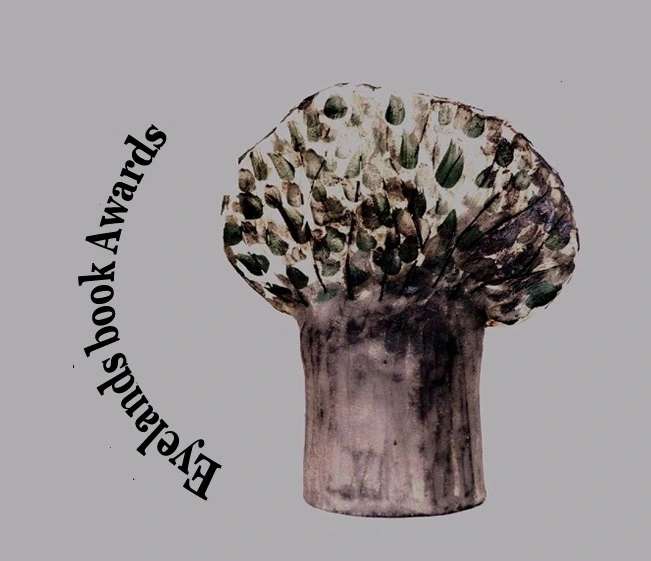
SHORT STORY Unpublished
The Noisy Quietude of Mikhail Gorky and Other Stories, Ken Pisani/ USA
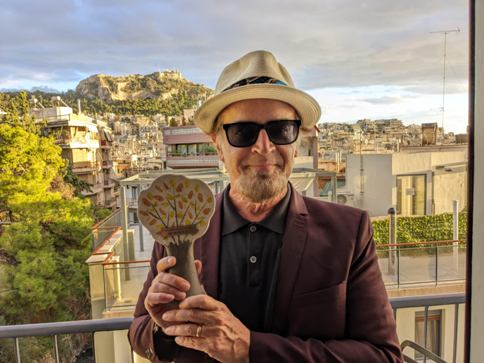
1.It’s very special to be honored – AGAIN! – by your great award. I was a finalist last year for a novel, and appreciate your recognition.
2. You know it’s not! I won your Grand Prize three years ago. What a treat to come to Athens to collect my Award!
3. I had ideas for stories but after tackling three novels and two novellas, I wanted to try going back to the short story format. I found it incredibly liberating to tell stories in length from 1,000 words to as long as 8,000, without having to worry about the structure, pacing, and abundance of content required of a novel.
4. The fact that you are an international jury is especially validating… that my stories are able to cross over culturally and still resonate is thrilling.
5. Back to a novel! Trying something multi-generational and complex, but still with a humorous look at our human condition.
SHORT STORY Published
Beneath a Darkening Sky, Judith Crow / Scotland
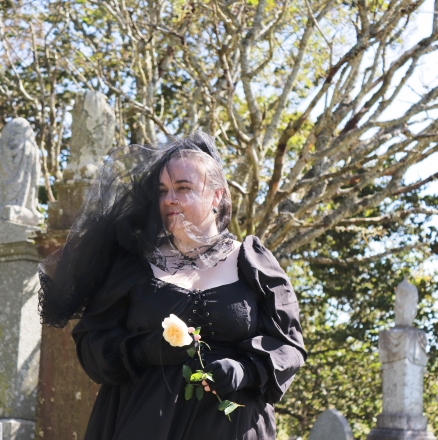
1. It’s funny: my sister found out before I did, by a matter of seconds. She very seriously suggested that I check the results, and the moment I found my name was a combination of thrill and disbelief. I was leaping around the house a few seconds later, with various members of my family joining me.
When I get back to work, I’ll have another chance to celebrate: this time with my colleagues. I’m an English teacher, so have lots of colleagues who are very supportive and interested in my writing.
All in all, it feels… incredible.
2. It’s certainly the top one! Before now, I have been a finalist in a couple of different prizes (including the Eyelands Book Awards!) and I was over the moon when Honour’s Rest was selected as a “top book for teens” in The Scotsman newspaper. I have never won a writing award before though – until now!
3. Gothic horror is very important to me. The book is dedicated to my eldest sister, Holly, because she introduced me to the genre by reading A Warning to the Curious (by M.R. James) to me when I was very young. It gave me a bad case of the heebie-jeebies, but that developed into a real fascination and love of the macabre. I now share the same story with my pupils who are studying for their National 5 exams.
Beyond that, folklore plays a significant role in my writing, as does people-watching – a favourite hobby of mine!
4. Honestly, I am hoping it will help me to sell more books. I’ve already seen an uptick in sales, but it is so difficult to get people to notice independently-published books. A lot of people don’t like self-recommendations, so being able to celebrate an international prize win is an incredible opportunity to get my book in front of the masses.
I’m also really hoping it might help me find a literary agent. Agents seem to look for people who can prove their literary value beyond just the extract they request, so winning an international prize should do just that!
5. This year, I am releasing the sequel to Honour’s Rest, which will take me back to the Young Adult genre. Even that’s a bit darker than the first book though!
In terms of writing, I have just finished a Gothic novel: the first time I have managed to write a novel for adults! It needs a lot of work, but just achieving that benchmark is enough to make me feel proud of myself. And my dad has set me the challenge of writing a contemporary romance – so far out of my comfort zone, but I’m enjoying the challenge!
LGBTQ
Swimming in words – Luke Icarus Simon /Australia
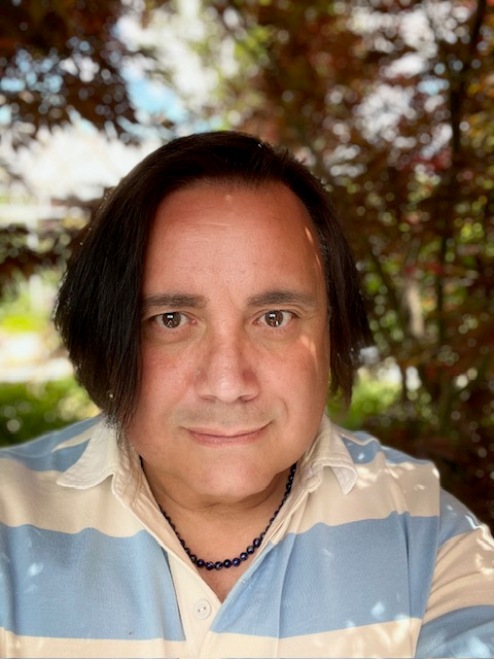
1. It is, of course, an honour to be recognised, and I am deeply grateful for this distinction. I learned of the Prize on New Year’s Eve—a night that, in Greek tradition, belongs to Saint Basil, who brings gifts to children beneath the Christmas tree. In a quiet and unexpected way, I felt that Saint Basil had delivered a wondrous gift to me as well; despite my years, I was returned briefly to the delighted anticipation of childhood.
Beyond the pleasure of the moment, the award offers a form of validation that writers rarely admit to needing, yet deeply feel. Writing is an intrinsically solitary pursuit, one that invites persistent, unanswerable questions: Is this work worthwhile? Does it matter to anyone beyond myself? Will this book find its readers? Such recognition serves as a timely reminder that while writing may begin in solitude, it is not meant to remain there. We write not merely for ourselves—were that the case, we would be keeping a diary—but to share a vision, a way of seeing, a lived experience with others.
In a literary landscape crowded by an ever-growing volume of new releases, many books—particularly those published independently—are quickly lost in the sheer abundance of what is released each year. To be recognised with an international prize offers the possibility of visibility beyond that noise: the chance to reach new readers and, perhaps, to open doors to further publishing opportunities.
2. No—I have been nominated for other awards in both my acting and writing career and was Runner-Up in an Australian short story literature prize once and was also Highly Commended in a contest for my film My Stamp Collection (available for viewing on my YouTube channel @booksplaysfilms
2025 was a turning point for my career as it brought multiple nominations for both Swimming In Words and my first novel, The Art In My Palm which was named as Quarter-Finalist in the BookLife Prize by Publishers Weekly and was also a Finalist in 2 categories (debut fiction and LGBT Fiction) in the Literary Global Awards in New York.
3. For many years, I had felt an urge to document the life of the artist as I had lived it—shaped by more than four decades of creative practice—and to do so with an unflinching honesty about the vicissitudes of my personal and professional history. Writing the eponymous, prose-like poem required a degree of vulnerability that was at times unsettling; to place such deeply personal experiences before the world was no small act. Yet I felt compelled to confront, rather than evade, the realities of my tribulations as a creative being working within a country such as Australia.
I use the word small not in a geographical sense, but to describe the scale of our literary culture: a modest industry, governed by a narrow circle of gatekeepers and arbiters who determine what is deemed worthy of publication. As an immigrant and a gay man, I have spent much of my four decades as a writer—and actor—being confined by reductive stereotypes I have repeatedly sought to dismantle. Early in my career, I was told that the themes of my work, and its so-called “ethnic” or immigrant milieu, rendered its perceived readership too limited to justify interest from a major publisher. Years later, after another Greek-Australian writer had achieved some success, I was told by a mainstream publisher, with disarming candour, “I love your work, but I already have a Greek gay writer.”
I wrote this book to remind gatekeepers that each writer is, first and foremost, an individual: a singular constellation of skills, lived experience, temperament, and voice. More importantly, the book reads to me as a defiant declaration of survival—both human and creative. I had reached a point in my career where I could no longer ignore the toll exacted by the glass ceilings I had breached, ceilings that left me not triumphant but wounded. Yet I did not wish to be seen, or to see myself, as a victim. Rather, I wanted to affirm myself as someone who had endured malfeasance and persisted through tenacity and resolve, refusing to be defined by others and insisting instead on being known through my own creative work.
The title poem, together with the sixty-nine poems that are included in the collection, stands as a testament to that survival. In writing them, I felt compelled to confront my many demons—not in pursuit of absolution, but in order to continue moving forward, to keep creating, and to remain faithful to the work still ahead; and hopefully to inspire others to work towards their own dreams and aspirations.
4. Winning an international prize serves as a timely reminder that I am, above all, a citizen of the world, and that literary possibilities need not be confined to Australia, my current country of residence. In a deeper sense, receiving an award from a competition based in Greece feels like a moment of return, a quiet closing of a circle. As a child growing up in Cyprus, Greece was understood as the Motherland: the source of our school textbooks, our cultural inheritance, and the values through which a deep allegiance to Greek history and culture was instilled in us from an early age.
The recognition also restores a sense of outward-looking adventure. It affirms that the literary world extends far beyond the limited horizons of any single national context, and that there are far wider waters to navigate than those immediately visible at home. In this way, the prize has offered me not only affirmation but also momentum—an energising impetus to continue submitting my work internationally, both for the books I have already written and for those still to come.
5. I currently have two novels ready for final editing and am nearing completion of a third. One of the novels is set in Sydney as well as in 1990s Athens and on a Greek island.
I am also keen to film a pilot for a television series I have written and to produce and star in a film set in Cyprus, where I was born and grew up. It is my dream to see my play, A Little House On An Island In The Aegean which was produced at the renowned La Mama Theatre in Melbourne, produced in Greece, on a Greek island as its title suggests—in either Greek or English. I’d love to work with some of my peers of the Greek theatre scene.
Looking ahead, I hope that further critical recognition and award nominations in 2026 will help these new works find a home with a major publisher and, in turn, reach a wider readership. While independent authorship offers certain freedoms, it also presents significant challenges—particularly in the crucial area of distribution.
The distinction between a book being available through online retailers and being physically stocked in bookstores remains profound. For an independent author, achieving meaningful bricks-and-mortar distribution is both difficult and costly, and many street-front booksellers remain understandably hesitant to order titles without the backing of a major publishing house. Media exposure follows a similar pattern: mainstream outlets tend to prioritise authors represented by established publishers, and it remains uncommon for independently published work to receive sustained attention or coverage.
POETRY Published
Eject city – Jason Morphew / USA
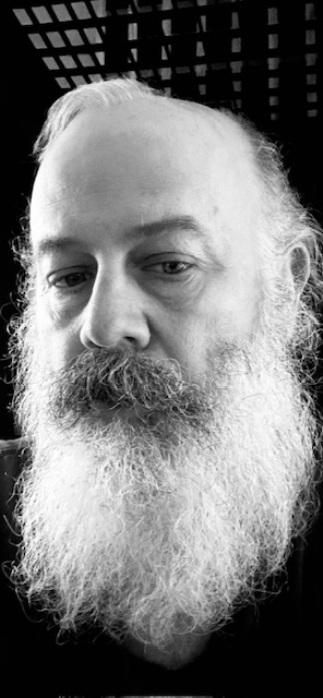
1. It feels great. This competition was important to me, and I worked hard on my book.
2.Yes, it is my first prize, and it’s exciting that it’s such a big and important contest.
3.My biggest inspiration was my family, who are the events in my life.
4.It motivates me to keep writing poetry.
5.I won’t stop writing poems, even if I should.
POETRY Unpublished
Journey to the iron gate, Stamatia Tsalouma/Greece
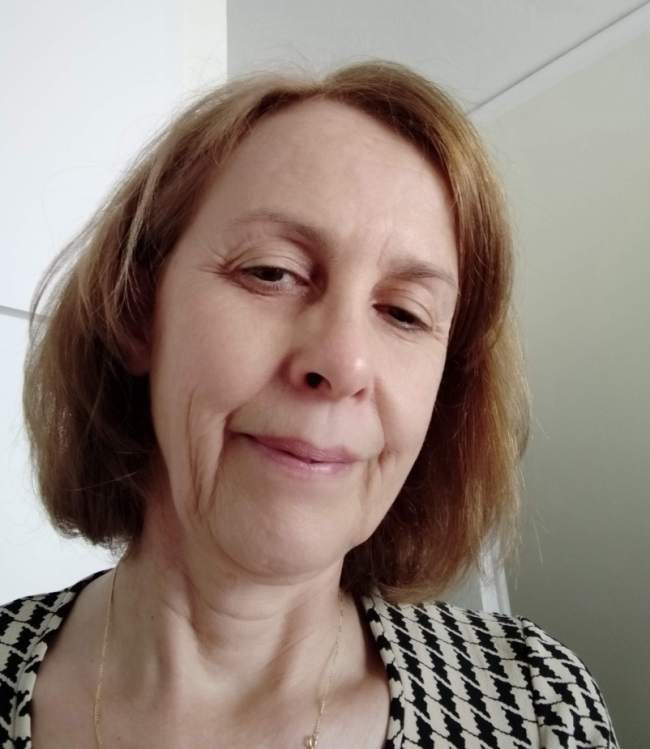
1.Receiving the email announcement on the Jan. 1st was the best New Year’s Day gift ever!
2. It is the first prize my poetry has received.
3. Nearly all of the poems in “Journey to the Iron Gate” were written in 2015, during the eight months leading up to my father’s death, and essentially comprise a record of those tumultuous times, both in my personal life but also in the life of the Greek nation (Hellas). I remember the feeling of riding a rollercoaster, the bank run, the thousands of refugees flooding our islands, the many NGOs that seemed to appear out of nowhere, the young people leaving to seek their fortunes abroad, and so much more. In the meantime I was spending lots of time with my father and hearing his reminiscences about growing up through occupation and war. It sometimes seemed as if the present and the past were overlapping in my mind and I think this is where poems are often born.
4. On a practical level it’s true that an international prize is a boost to any writer’s career. Winning a prize means recognition, and also a reward for the hard work and long hours that go into every little poem. On a more personal level I feel as if I’ve been gifted with a connection to other writers around the world, after having participated with them in this competition. On the whole, to me it means less isolation as a writer, and more hope for the future!
5. I’m working on a project at the moment which is focused on Athens, and more particularly on the area around Korydallos where I lived for 30 years. I have much to say it seems, but not all of my ideas work in English, so we’ll see how that will turn out. Also I’m keen to do more translations of both Greek and German poets.
SELF-PUBLISHED
Max Eidelman – Wonderland
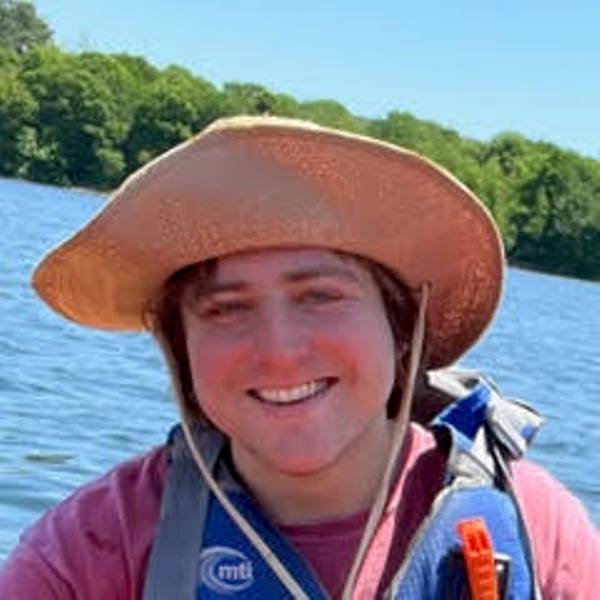
1.I am tremendously flattered to be a winner in an international competition. It is quite special for my writing to be recognized amongst a group of people from across the globe of all backgrounds.
2.This is indeed my first prize. Wonderland is also the first novel I have written, so winning this award has certainly fed my resolve to keep writing.
3.I’ve always wanted to write a book, but for quite some time it felt impossible to know where to begin. Wonderland began as a project in 2019 of writing short stories that involved a cast of characters tangentially related. Some characters I gravitated to more than others and ultimately Pangaea was the character I returned to most often. I decided to write a story with her as the main character, and the issues that she grapples with – intimacy, isolation, and technology – seem to be universal.
4.Wonderland is the first book I’ve written, and so I find it motivating that it has won an international prize.
5. I’m currently writing a new novel, though it looks nothing like Wonderland. I have kernels for quite a few other stories, but right now I’m obsessed with the horror genre, which is steering this new project. I do hope to publish traditionally, but will continue to enter competitions and be part of the community of independent publishing.
MEMOIR
The Nutcracker Chronicles: A Fairytale Memoir -Janine Kovac /USA
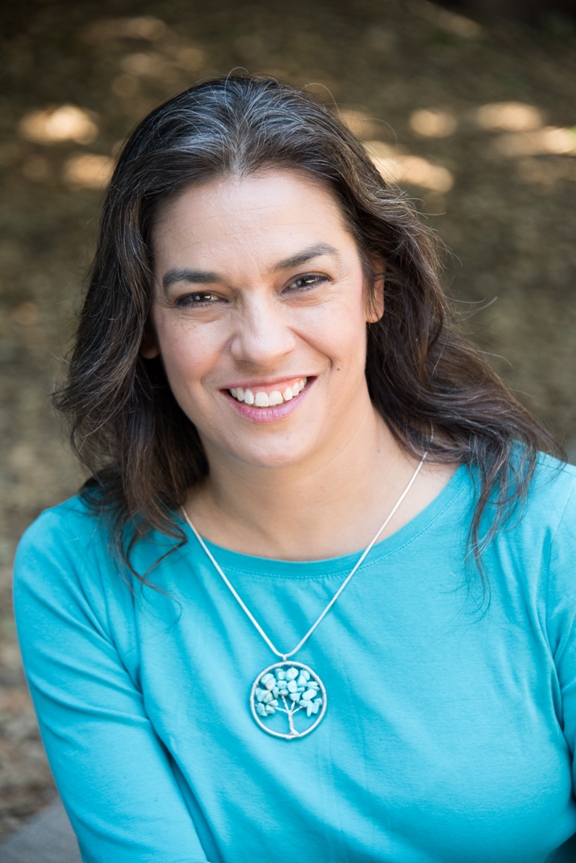
1.I have followed the Eyelands Awards for several years, after a writer I admired won in 2019. There is a such a high caliber of writers submitting their work. I feel honored to be in such good company and grateful to the founders of the Eyelands Awards. There are not many book contests where authors can submit their work directly. I’m grateful to the Eyelands Awards for creating such an opportunity.
2. This is not my first prize, but it is the first prize for my book The Nutcracker Chronicles. And it almost didn’t happen! When I originally submitted my book for The Eyelands Award, I forgot to submit my manuscript with my application. By the time I realized my mistake, I assumed it was too late. But a little voice urged me to contact the contest organizers and ask to submit my book. I’m glad I did!
3. I was a ballet dancer for many years. Not only did I dance in many productions of The Nutcracker, but so did my husband and so did our children. I had many anecdotes about our families’ performances and as I wrote them down, I realized that the stories that unfolded onstage mirrored life experiences of love, motherhood, ambition, and aging.
4. I spent much of my ballet career dancing abroad. I saw how I had been shaped by my culture but also how I could learn and grow from the countries I now called home. Storytelling and the urge to create art is universal. To see my memoir recognized internationally speaks to our capacity to connect our hearts through our art.
5. I don’t always write about dance, but my work always centers power dynamics and women’s bodies. I am currently revising a novel based in Northern California about a young woman trapped working for an organization that is really a front for human-trafficking. In addition to my writing, I teach Scrivener software classes and curate literary events in the San Francisco Bay Area.
SCI-FI/THRILLER/CRIME Published
Crimean Congo Hemorrhagic Fever (CCHF diversion) – Bolat Ospanov /Kazakhstan
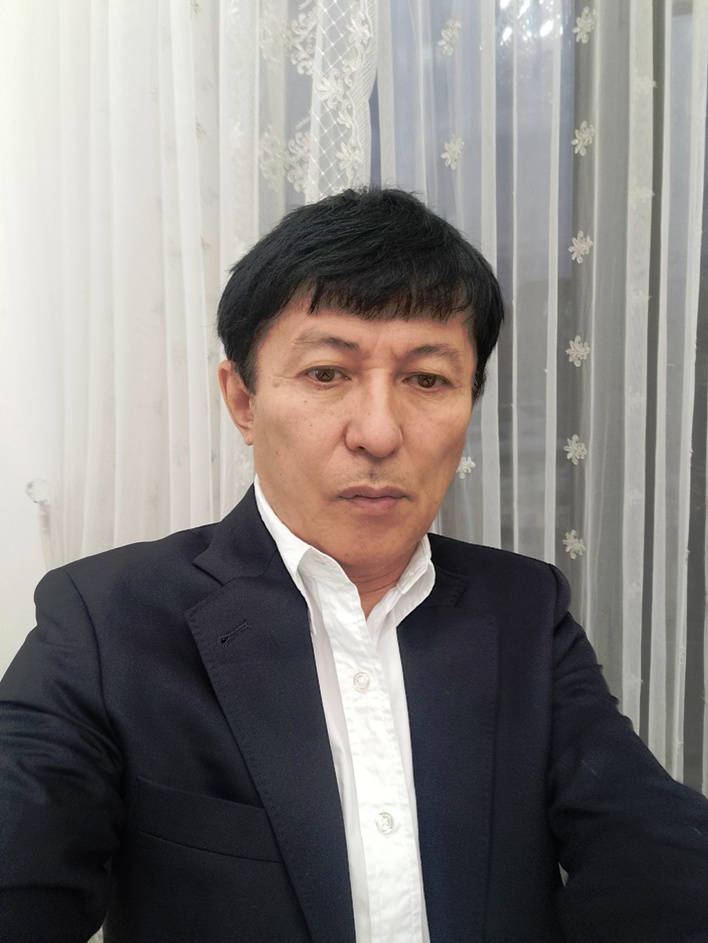
1.I’m thrilled to have won this international literary prize.
I feel this award has been a powerful inspiration to me, and that I’ve become a world-class writer.
2.This is my second international literary award.
My novel, “Eternal Hereditary Prince,” was highly praised in Italy in 2024. I received the Italian International Literary Prize in 2024.
3.I’m a doctoral virologist. My profession as a virologist inspires me.
And I write novels about dangerous viruses.
I wrote a novel about the coronavirus, published in London in 2024. The novel is called Coronavirus Pandemic Syndrome.
4.Being a laureate of an international literary prize is prestigious for me. It opens the door to international renown as a writer. It will also bring me greater recognition in my country.
5.My plans for the future are to keep writing even better novels.
I’m writing now. And my novel is called: Palace Secrets of Kilimanjo
SCI-FI/THRILLER/CRIME Unpublished
A Sweet and Faithful Lullaby… – Amichai Kolberg /Philippines
1. Winning an international contest like the Eyelands Books Awards is deeply meaningful to me. Writing is often a solitary and uncertain process, and having my first novella recognized by an international jury confirms that the story communicates something real and resonant beyond my own perspective. It’s both validating and motivating, especially at this early stage of my literary career.
2. Yes. This novella is my first completed long-form work, and this is my first international prize. Prior to this, the only distinction my writing received was being longlisted for the CIBA. That makes this award particularly significant, it marks a clear milestone and gives me confidence to continue developing larger and more ambitious projects.
3. The inspiration for the novella developed in layers over time. It began with a sense of empathy and affection for vampire lore, and the story was originally conceived as a prequel to a larger series. As I wrote, however, the story began to take on a life of its own, especially in the final quarter, which flowed almost instinctively, even as other parts were challenging to fill.
A major influence on the novella is a secular reinterpretation of biblical mythology, particularly the stories of Adam, Eve, and Lilith. The setting echoes the Garden of Eden, with characters symbolically aligned to those archetypes: Eva as Eve, Red as Adam (with “Adom,” red, echoing the Hebrew root), Lilith as a disruptive, transformative force, like the snake, Saul as institutional authority and the voice of God (who is often seen as the father), and the other characters reflecting the surrounding “animals” of the garden. These elements allowed me to explore themes of authority, indoctrination, free will, and resistance, especially in relation to rigid or extremist religious and institutional systems that suppress critical thinking and questioning.
My personal experience and familiarity with people on the autistic spectrum also influenced the character of Eva, whom I wrote as neurodiverse (even though not explicitly mentioned it), allowing me to explore vulnerability, perception, and resilience in a more honest way.
When I returned to the story later, I realized that it is never really finished. New ideas kept emerging like stronger roles for Lilith and Red, layered narrations originally meant as content warnings, and eventually a lullaby that became both a thematic device and the structure of the story itself. The verses of the lullaby evolved into chapter titles, and its stanzas as the parts.
That experience fundamentally shaped my view that stories are never truly finished. They can evolve, branch, and grow over time, through the author and through readers. This belief directly inspired my work on a collaborative storytelling platform designed to support evolving narratives and shared creative worlds (which I am currently developing).
4. It validates my literary direction, but more importantly, it opens doors. Winning an international prize gives me visibility and credibility as a writer, which allows me to enter the literary world more confidently and to promote not only my writing, but other creative projects I’m developing (like the platform).
On a personal level, as a lifelong geek and creator, it also means the opportunity to engage with literary and genre spaces such as festivals, conventions, and collaborations, not just as a fan, but as a contributing voice. It marks a transition from private creation to public participation.
5. I plan to continue expanding this story and its universe, potentially developing it into further works. Alongside that, I’m writing an anthology of biblical and scientific theories that I hope to publish in the future.
I’m also collaborating with a close friend on a tabletop role-playing game that I helped design, which further explores collaborative storytelling. In parallel, I’m developing a storytelling-focused social platform aimed at writers and readers who want narratives to evolve collectively rather than remain static (which I have mentioned earlier).
Beyond writing, I’m deeply inspired by steampunk aesthetics and am designing a steampunk fashion brand built around narrative-driven social media storytelling. For me, all of these projects are connected and explore different ways stories can live, evolve, and be experienced across mediums.
CHILDREN’S Published
Pandora’s Choice Subtitle: The Oracle Must Be Obeyed – E.A. Dickinson/ U.S.A
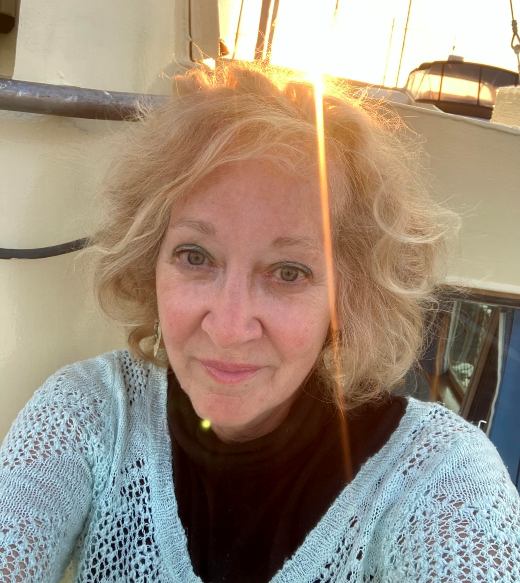
1.I am so grateful, and stunned ! for my book to receive honors in the Young Adult, Self-Published category. As an educator, this book was always meant to speak to the hearts and minds of students of world history. Now, this prize will help me reach more curious minds and introduce them to the amazing artifacts and events of a pivotal time in our human evolution, thousands of years ago.
2. Pandora’s Choice is my very first self-published novella; the idea being born over ten years ago. The goal could not be realized until I learned so many new skills; from typography, to Photoshop for the great color illustrations, to Greek vocabulary, history and geography, and of course finding Pandora’s voice and letting her tell me where to go next. The Eyelands Award is a singular highlight in my creative life. My biggest surprise was how excited my family and friends are for me, and how much it lifted them up, and surprised them as well.
3. I have lived for extended times in many regions of the USA , but always near, and sometimes on, water. Oceans and rivers are rich in life, unpredictable, settle our minds and excite them, and always have been conduits for new adventures, new relationships and deepening our sense of self. Pandora’s world – the Aegean Sea islands- is totally maritime, and Greek mythology was not fantasy to her fellow villagers, but guided their life and death choices and understanding in the 7th century BCE. Pandora is named after the “first woman” – who was blamed for releasing the horrors and the blessings we all live with. Our young people today, world-wide, are burdened with the complex and often menacing state of the natural and political world of the 21st century. I asked, how will Pandora deal with the changes before her ? I thought about the choices our young adults will have to make, to navigate life today. I wanted to dive deeply into this formative past – a time of great opportunities, new ways of thinking, creative energy, and hope- and tell her migration story with great sympathy for her and her family.
4. I wish I could give a warm hug to all of the Prizewinners, contestants and judges to bring our work, our perspectives, into the light together and celebrate the good and unique contributions of each of our cultures. What a wonderful and humbling thing to be recognized in Greece for a story of Greek history meant to elevate spirits, by an American going through difficult tests in troubling and divisive times.
5. This prize has energized me to throw myself further into another pivotal place and time in history; sometime between late 1600s and through the 1700’s in Brittany France and Acadia in the Americas. I would like to develop a character whose journey illuminates the chief trials and wonders of that transition, and exposes the forces that moved my Breton and French Acadian ancestors across the heaving Atlantic Ocean and made them New World survivors of an intentional genocide. It will be aimed at Young Adults and contain a gallery of visual aides to support their study of the period.
Eventually I would also like to write a sequel to Pandora’s Choice.
CHILDREN’S Unpublished
Flora’s Flock and Other Stories to Read Aloud – Mike Mesterton-Gibbons /United Kingdom
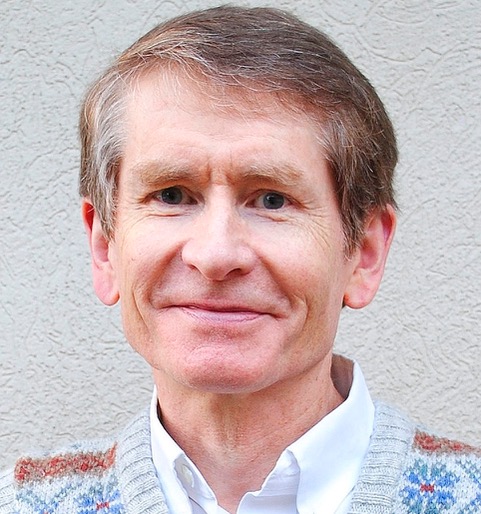
1. I’m delighted to have won the Children’s Unpublished category of the Eyelands Book Awards. It is exceedingly gratifying to know that my children’s stories are appreciated outside my family!
2. This is my first prize for children’s fiction, though I have a prior award for poetry. In 2020, I won the adult category of the Southern Shakespeare Company’s annual Sonnet Contest.
3. Unfortunately, I can no longer truly remember, since first drafts of all six stories in my book were written many years ago. But even if I had begun the stories more recently, I might still struggle to recall my sources of inspiration. When I write, it usually feels, not so much as though I am composing stories, but rather as though I have become a receptacle in which stories compose themselves. So I am scarcely
aware at the time of what is inspiring me. Of course, stories do not materialize from nowhere, and afterwards—typically, long afterwards—I may recognise thata character’s eccentricities are shared by someone I know (possibly even myself).
Perhaps I am inspired, subliminally, by the people I know!
Nevertheless, I do remember that among my favourite stories in childhood were Aesop’s fables, the adventures of Rupert Bear and the novel Redcap Runs Away (by Rhoda Power). Perhaps the stories I enjoyed having read to me as a child have helped to inspire the stories I am writing for children now, in which I aim to gently teach a moral or morals through tales of adventure taking place in quite idyllic settings. In any event, my stories aim to bring as much comfort and joy to
readers and listeners now as childhood stories once brought to me.
4. More than anything else, it means recognition—whose value to an unpublished author cannot be overstated.
5. My most immediate goal, building on the recognition that this prize brings, is to find a publisher for the book. Beyond that, I have plans for a much longer story, effectively a children’s novel. And in contrast to the vagueness of my answer to Question 3, in this case, I will be able to identify my primary source of inspiration with some precision, because it consists of a set of ceramic objects now staring at me from a shelf.
EYELANDS HONORABLE MENTION
Memoirs of a Woman SURVIVOR from the First Year OF the Holocaust in Gaza – Njoud Ghassan Salem /Palestine
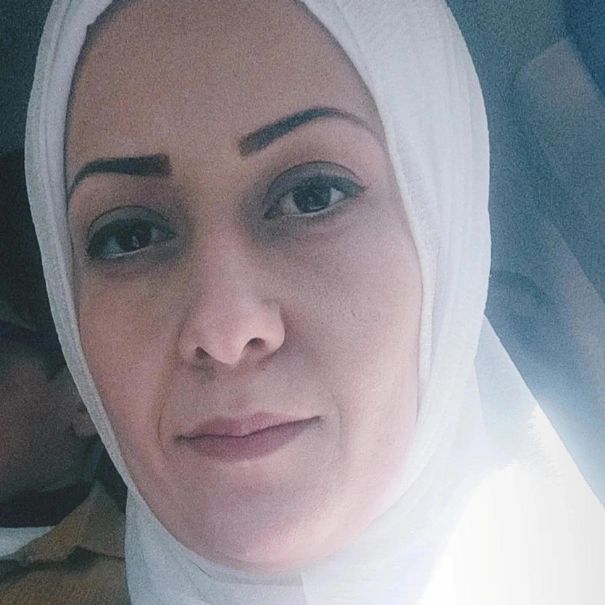
1. I feel a great sense of pride on one hand, because I was able to turn our ordeal into a gift and an opportunity, and on the other hand, because I discovered how deeply humanity and generosity are cherished by people, and I managed to convey the message of my book to the hearts of readers. I am especially proud that a great publishing house like Eyelands has honored me this is truly a privilege.
2. Yes, this is my first literary prize, and I sincerely hope it will not be the last. You have motivated me to harness my words and cultivate the depths of my soul.
3. My inspiration came from my determination to portray the inner world of anyone who survived genocide and still awaits their uncertain fate. Additionally, I was compelled by my inability to express my sorrow for each member of my people, as we all live under one roof of tragedy. I transformed my suffocating silence into a message to all nations, choosing English in particular so that the meaning of our shared humanity and hearts can be understood, no matter the languages we speak. Sadly, this genocide has not yet ended… and I sincerely hope that humanity truly survives it.
4. I feel enveloped in love and a tremendous energy because of this win, a profound sense of reassurance and gratitude for being recognized. It feels as if the world has paused for a moment to tell me that everything will be alright, that better days are ahead. This recognition is more than an award; it is a spark that reignites my passion, pushing me to continue writing, to give life to my feelings and thoughts through words I once held back. For so long, I postponed my writing, thinking there would be another time but now, your support has become an inseparable part of my journey, giving my words wings and allowing my story to reach hearts across the world.
5. I am currently working on a book, a sort of second part to my first book that was honored by you. It will carry two dimensions: the first, literary, full of emotion and life; the second, historical, documenting important events that concern my people in the present time. I aspire to present the completed book to you once it is finished.
Meanwhile, I carry a long list of books and ideas I have been nurturing for years, and I aspire to bring them to life soon, after I fulfill my mission toward my people that is, to give through my pen what I could not provide in the face of fear and hunger.
Thank you once again. I love you from the bottom of my heart. Your support has left an unforgettable mark on me.
NOVEL Published
The Body In Zeller’s Barn – Arian Harandi / USA
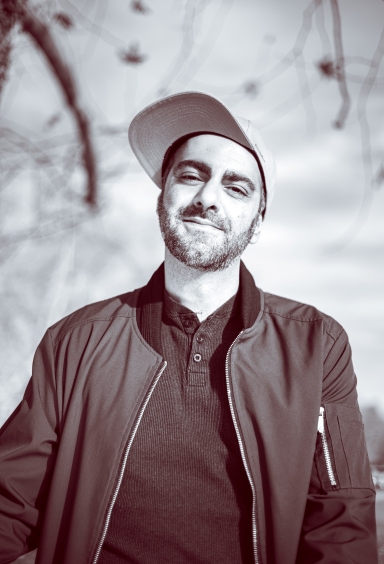
1. This was an incredible surprise and a real honor. It means so much to me to have been chosen for a prize like this. Writing can be a pretty solitary process, so knowing that people not only read the book but felt connected to it enough to recognize it is deeply meaningful. Thank you.
2. Yes it is, and I couldn’t be more proud. I’m incredibly grateful for the warm response the book has received so far, and the Eyelands Book Awards Prize is easily the most meaningful recognition I’ve received as a writer.
3. I wanted to write the kind of YA novel I would have loved when I was younger, and to be honest, the kind I still love to read today. I didn’t want to pander to the audience, talk down to them, or turn the story into a lesson with a neat moral at the end. I wanted to trust the reader. The goal was to write from the point of view of a sixteen-year-old who knows how dark times can get, but finds humor in the everyday because they believe there is still so much good in the world.
4. Even though the book is set in “small-town USA,” I always hoped the story itself would feel universal. Winning an international prize is especially meaningful because it says this story can resonate beyond one place or one experience.
5. I’m definitely staying in the YA murder-mystery world. They are so fun to write, although right now I’m still deep in the messy stage of figuring out how the crime unfolds. For me, that part is half puzzle, half obsession, and I’m enjoying the process of letting the story reveal itself.
HISTORICAL Published
The Fastest Girl on Earth – Lisa Brace/United Kingdom
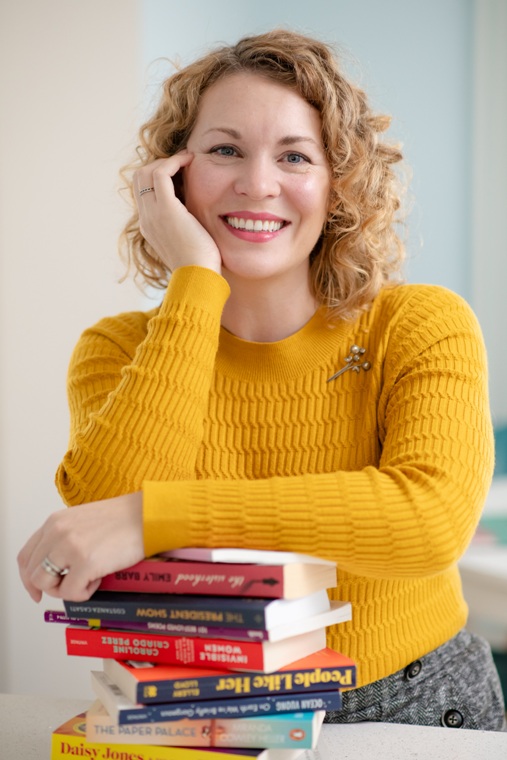
1. Actually shocked. It’s a real honour.
2. My previous novel, Swim, was shortlisted by yourselves the year before, but this is the first win!
3. A real life woman called Dorothy Levitt who had the world at her feet, then disappeared for years. I like to think my novel fills in her lost decade.
4. It’s really exciting. It’s a real confidence boost in what I can offer. Thank you,
5. Currently writing third novel, Lipstick, set in 1950s USA!


